Subscribe to our newsletter to receive updates about our artists, exhibitions, publications and fairs.
Exhibitions
- David Bestué
gran ojo
10/09/2026 - 07/11/2026
Seven years on from his last solo gallery exhibition, David Bestué presents his first show at Ehrhardt Flórez.
The exhibition is titled gran ojo (‘big eye’) due to the tension it presents between greyscale and pure colours. In his
recent works, the colour scheme of the materials used – including those sourced from waste material – was determined
by their raw nature. Bestué has now chosen to add another layer: surfaces coated in pure, complementary colours. A
striking contrast is thus created between the greyish, ‘worn-out’ (as the artist describes it) materiality and something
that seems otherworldly, fresh, as yet unadulterated.
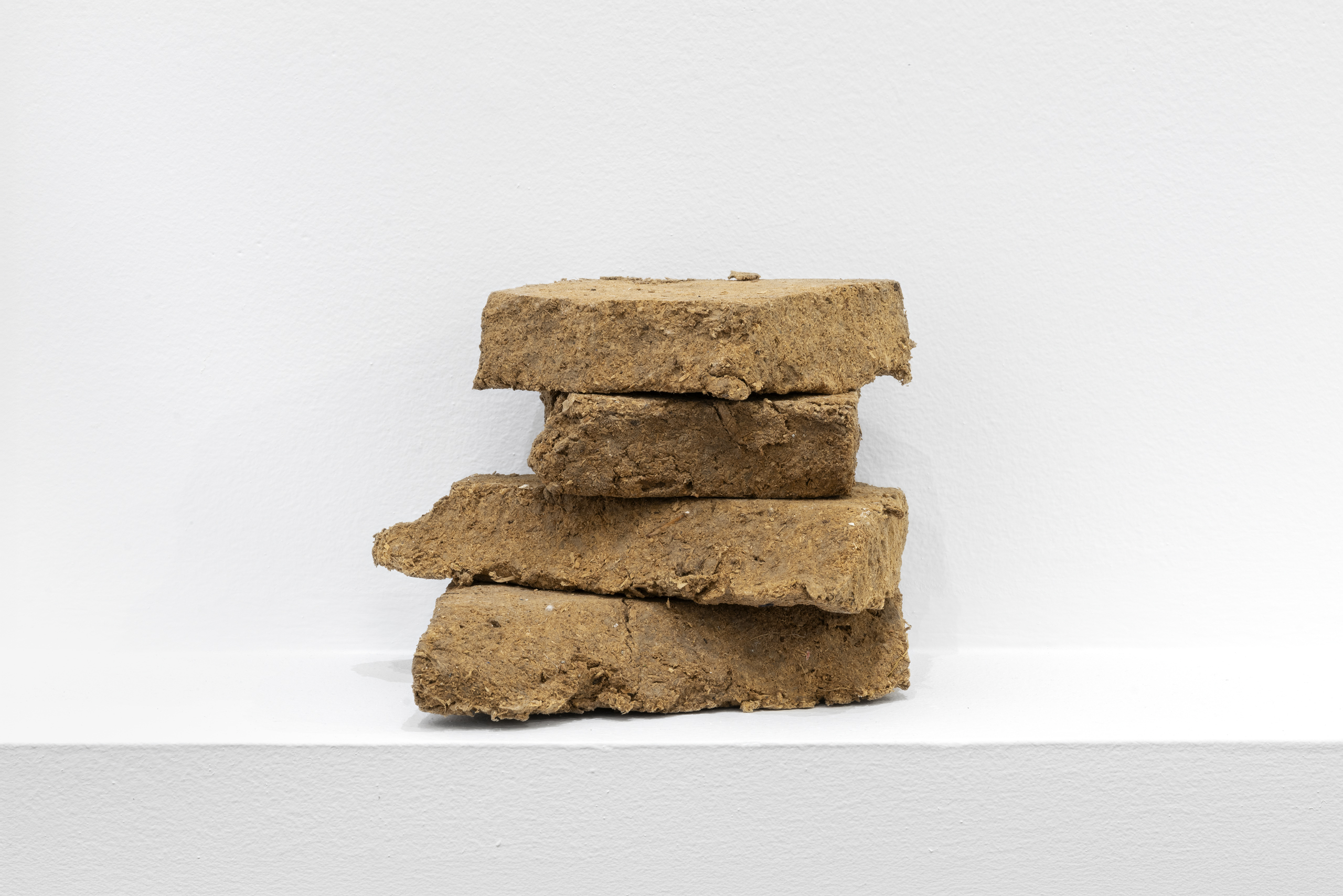
When working with materials sourced from waste, Bestué typically starts with something that has already been many
other things before: shredded paper and fabrics, metal slag, bone ash or sawdust. This usually results in a greyish or
brownish hue in which everything appears to have dissolved to the same level, undifferentiated and insipid.
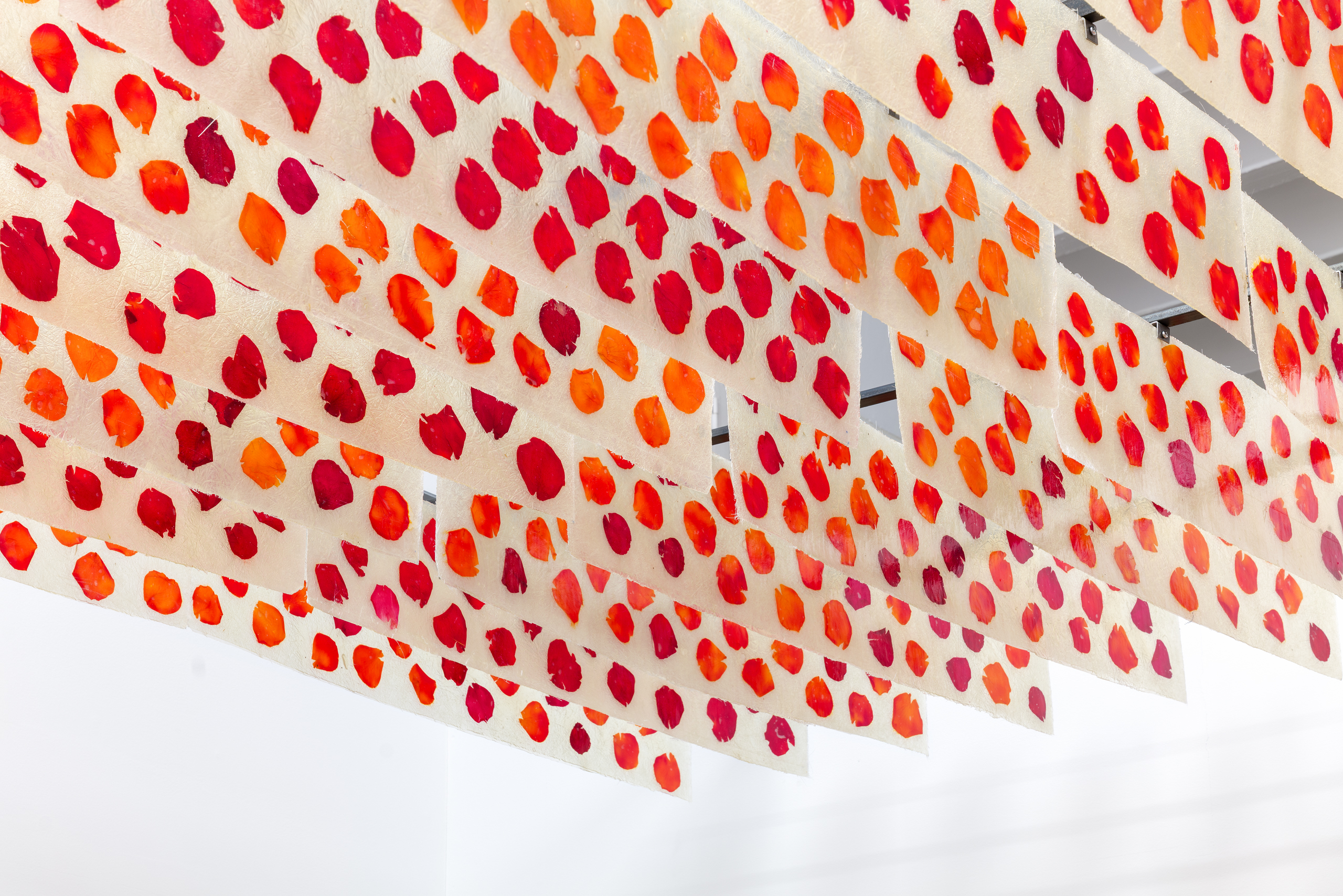
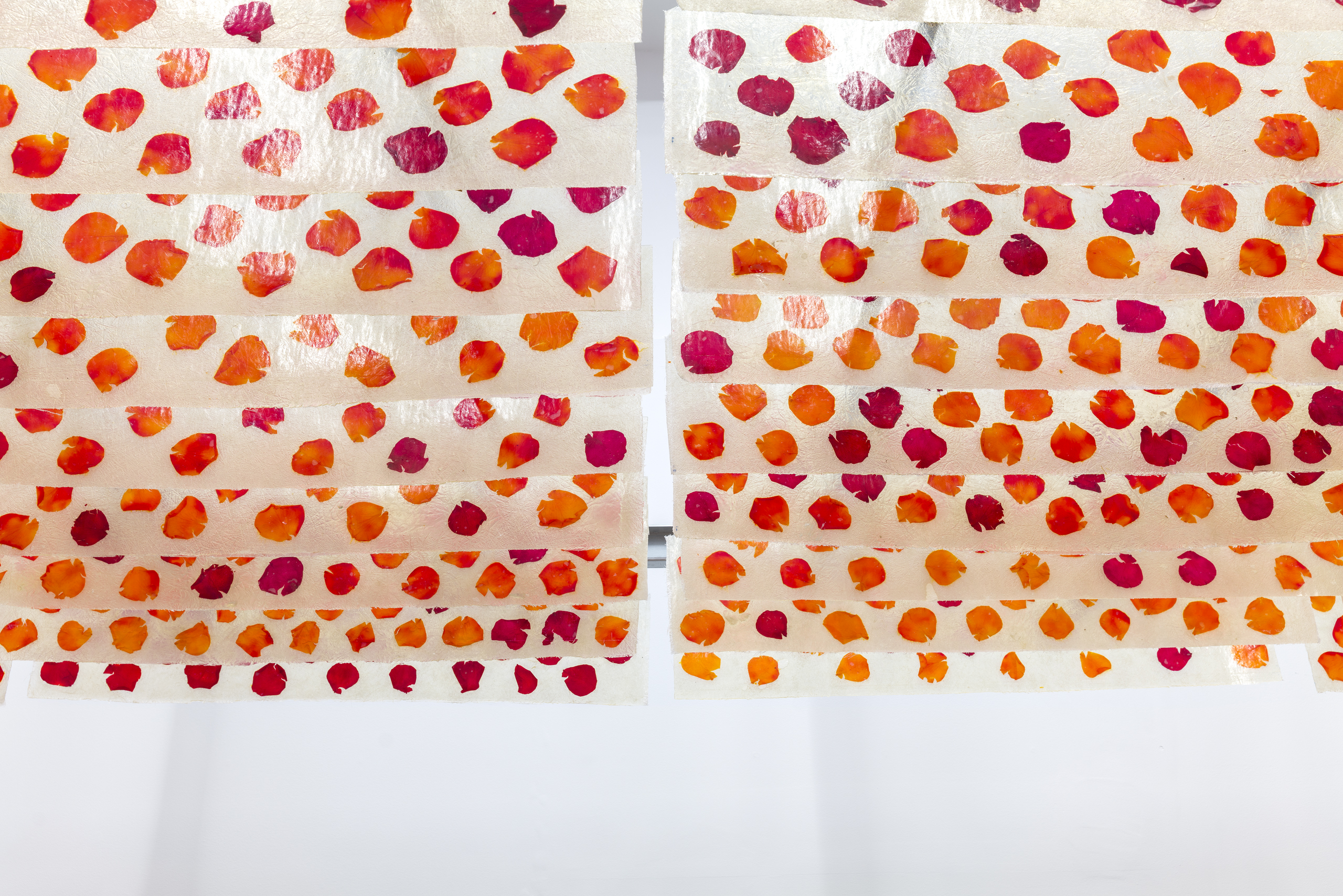
For some time now he has juxtaposed these materials with rose or bougainvillea petals, encapsulated in resin to
preserve their pigmentation and presented as modular elements in the form of corrugated sheets or ceiling slats,
introducing a new chromatic quality. The prefabricated and the unique, the industrial and the organic thus come
together in different layers on the same surface.
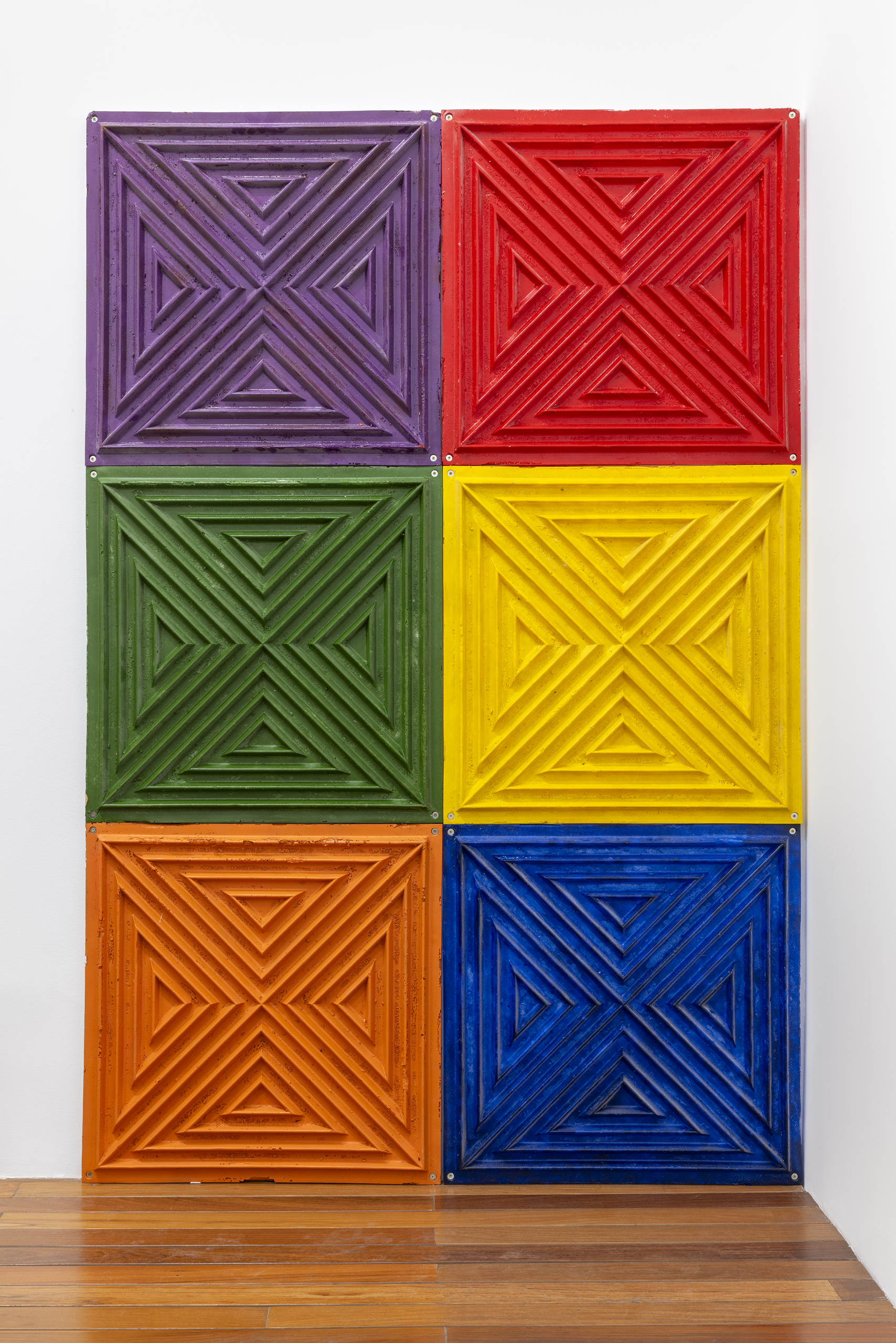
The reference to the use of pure and complementary colours – to what is new and as yet unmixed – which appears
sporadically across the three exhibition rooms, in turn alludes to the ‘rainbow’, symbol of the LGBTI+ community.
Bestué draws attention to this link while simultaneously reflecting on just how arbitrary such an association can be.
gran ojo also features larger-scale interventions that interact with the architecture or which possess their own
architectural and structural dimension. The space is shaped by various large-scale elements that provide a setting
for smaller ones. The perceptual, the mechanical, the mobile and the static elements shape the trajectories and
sensations, particularly perceptual and visual, through which the exhibition is structured.
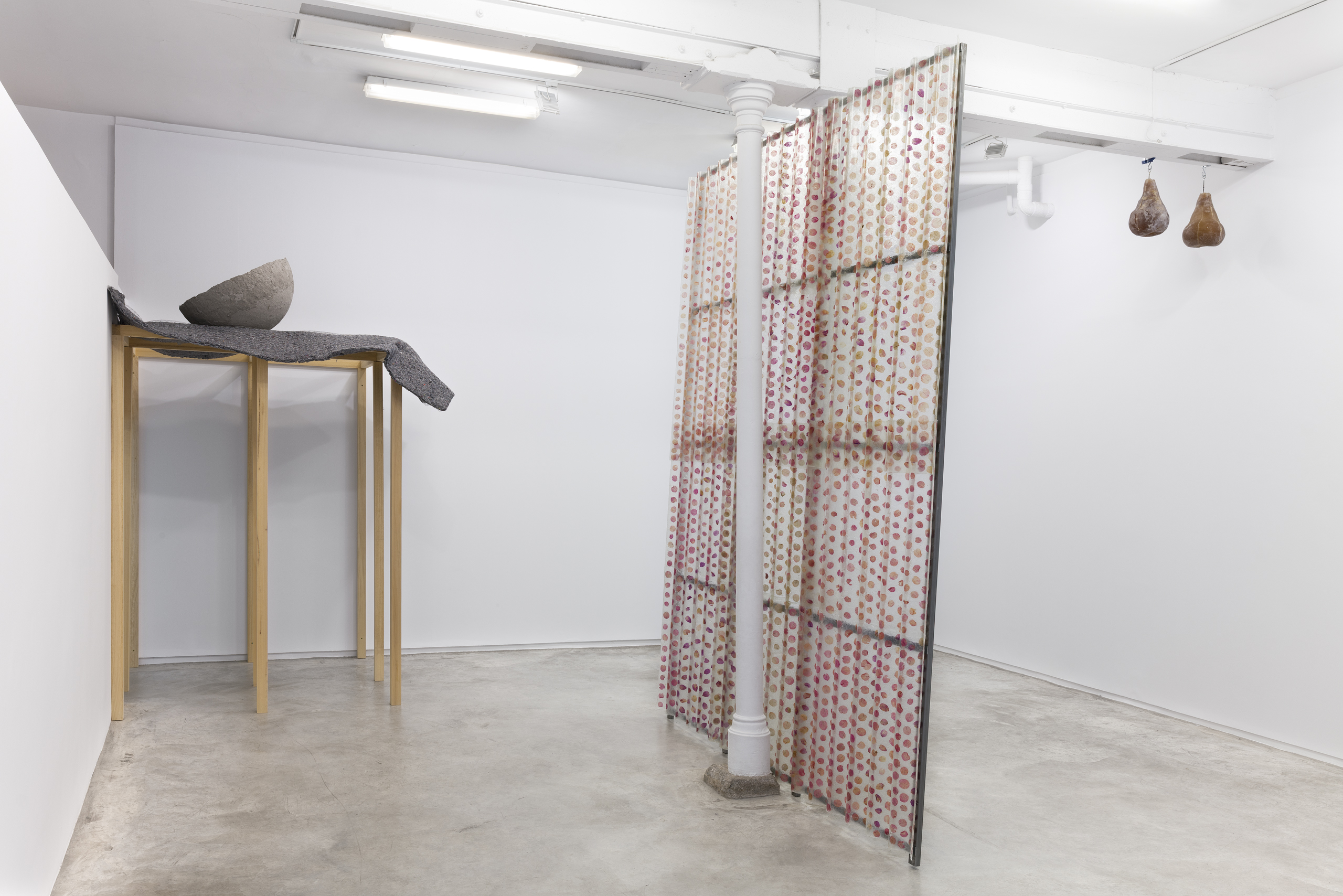
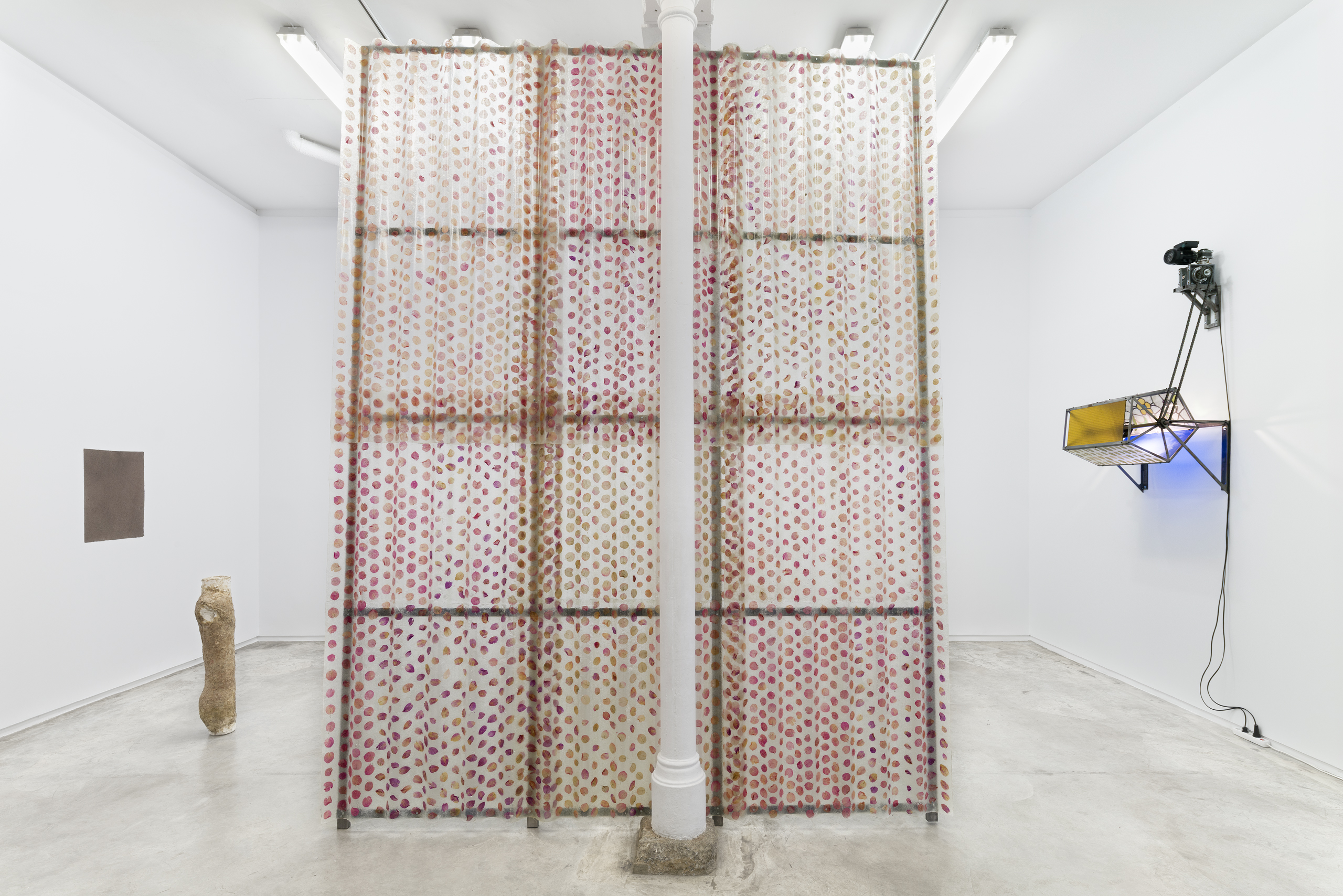
Spanning the space of the main hall is an enormous wall composed of structures similar to corrugated fibre-cement
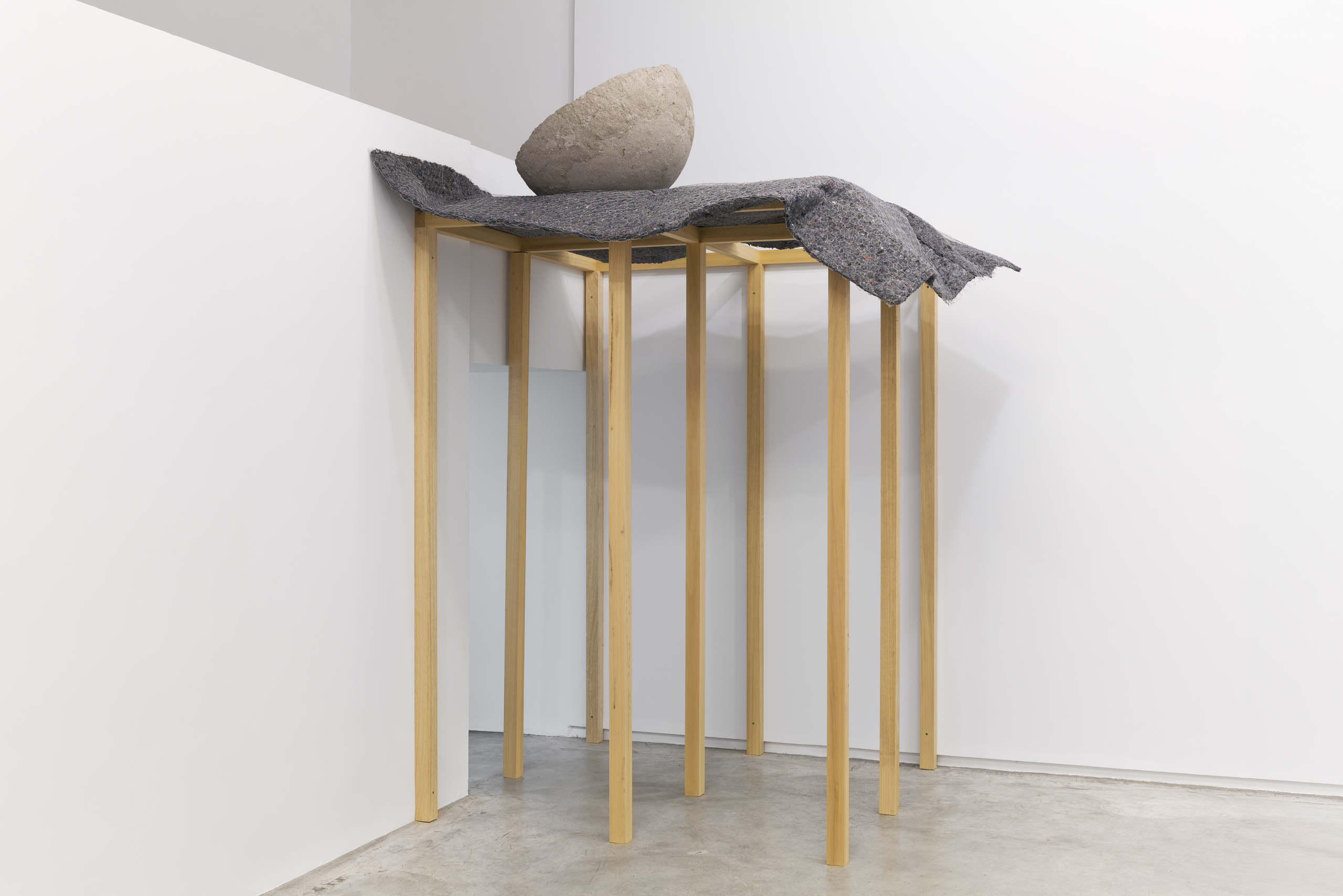
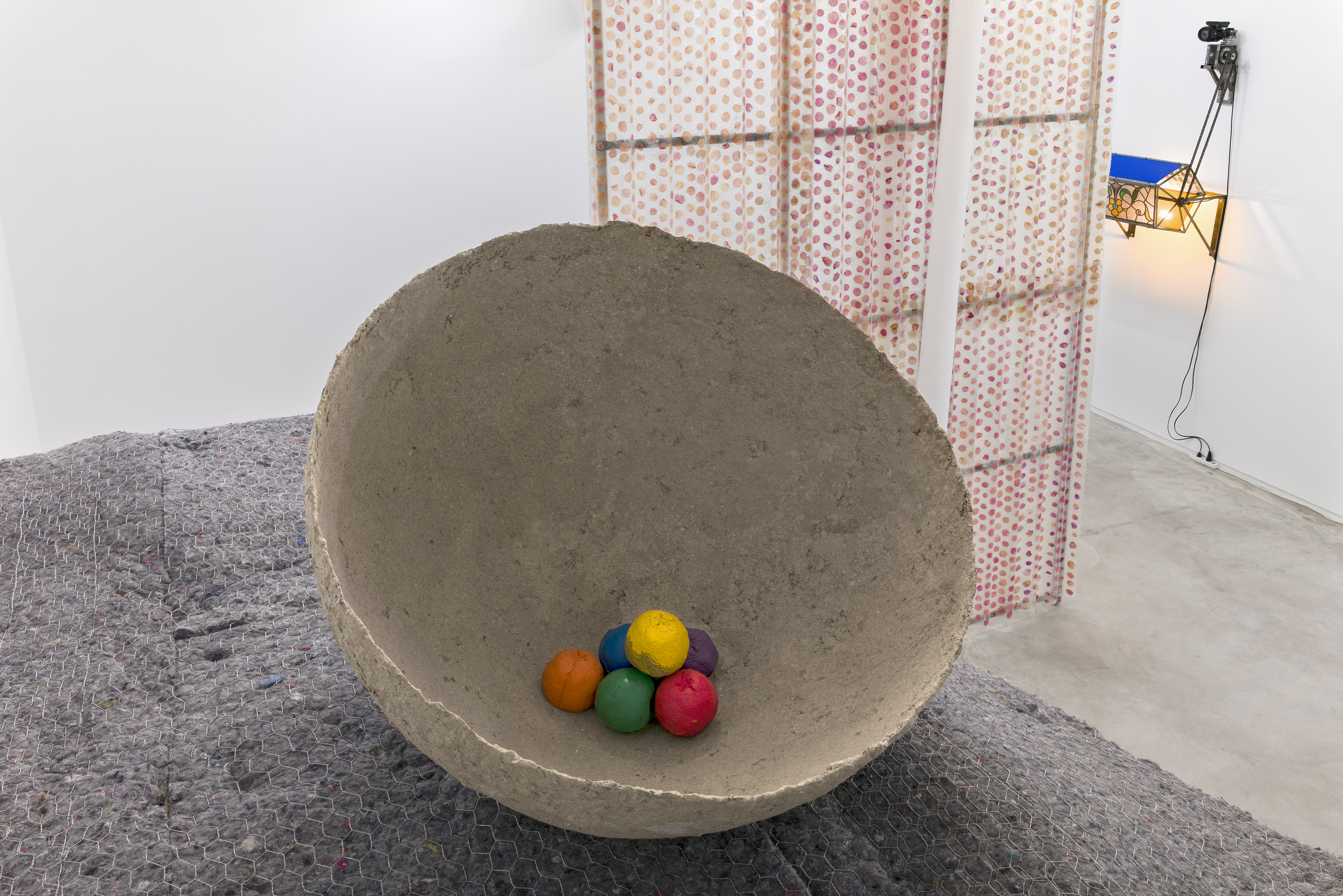
sheets but made of fibreglass and bougainvillea bracts, dividing the exhibition into two parts; a bowl is placed atop a
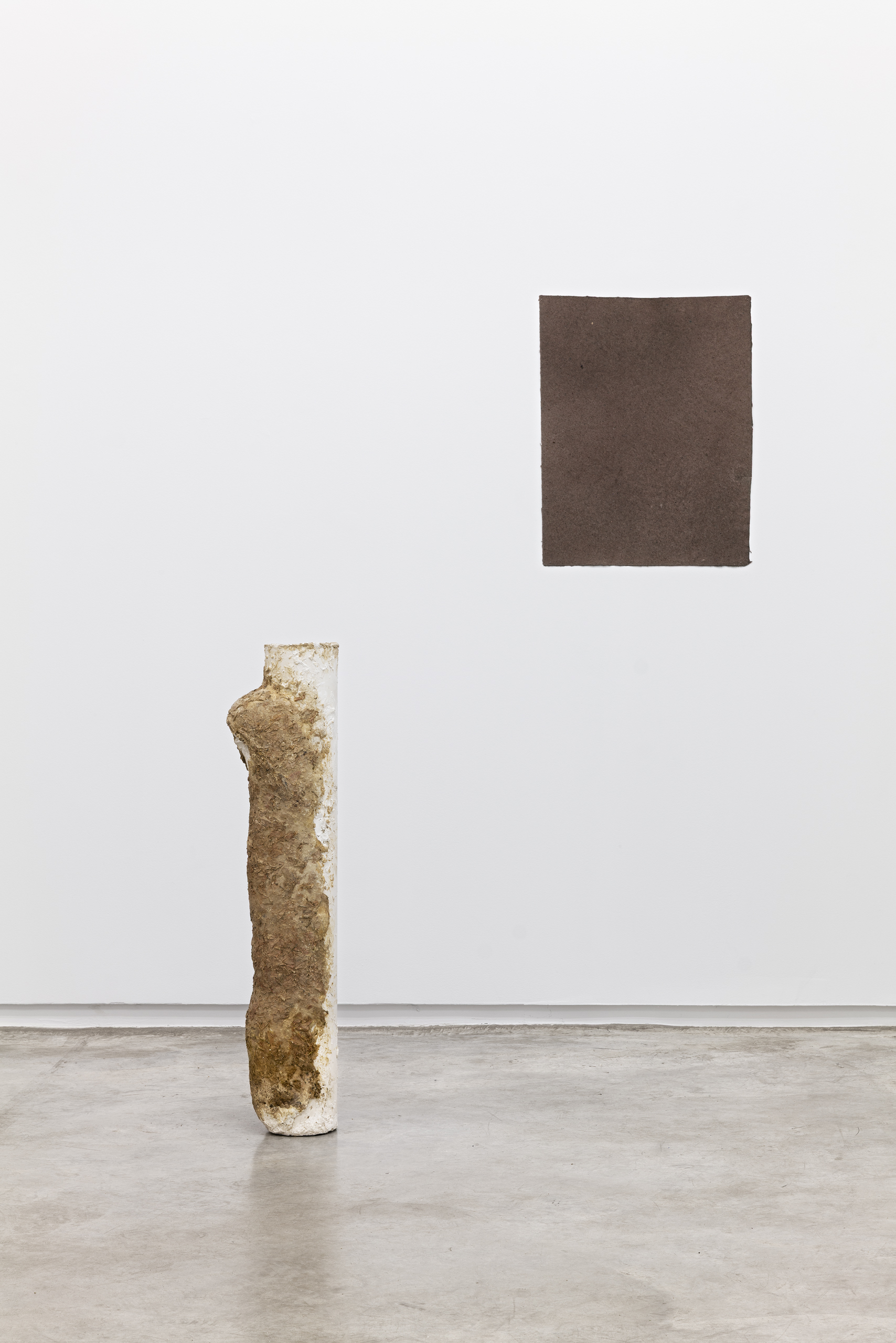
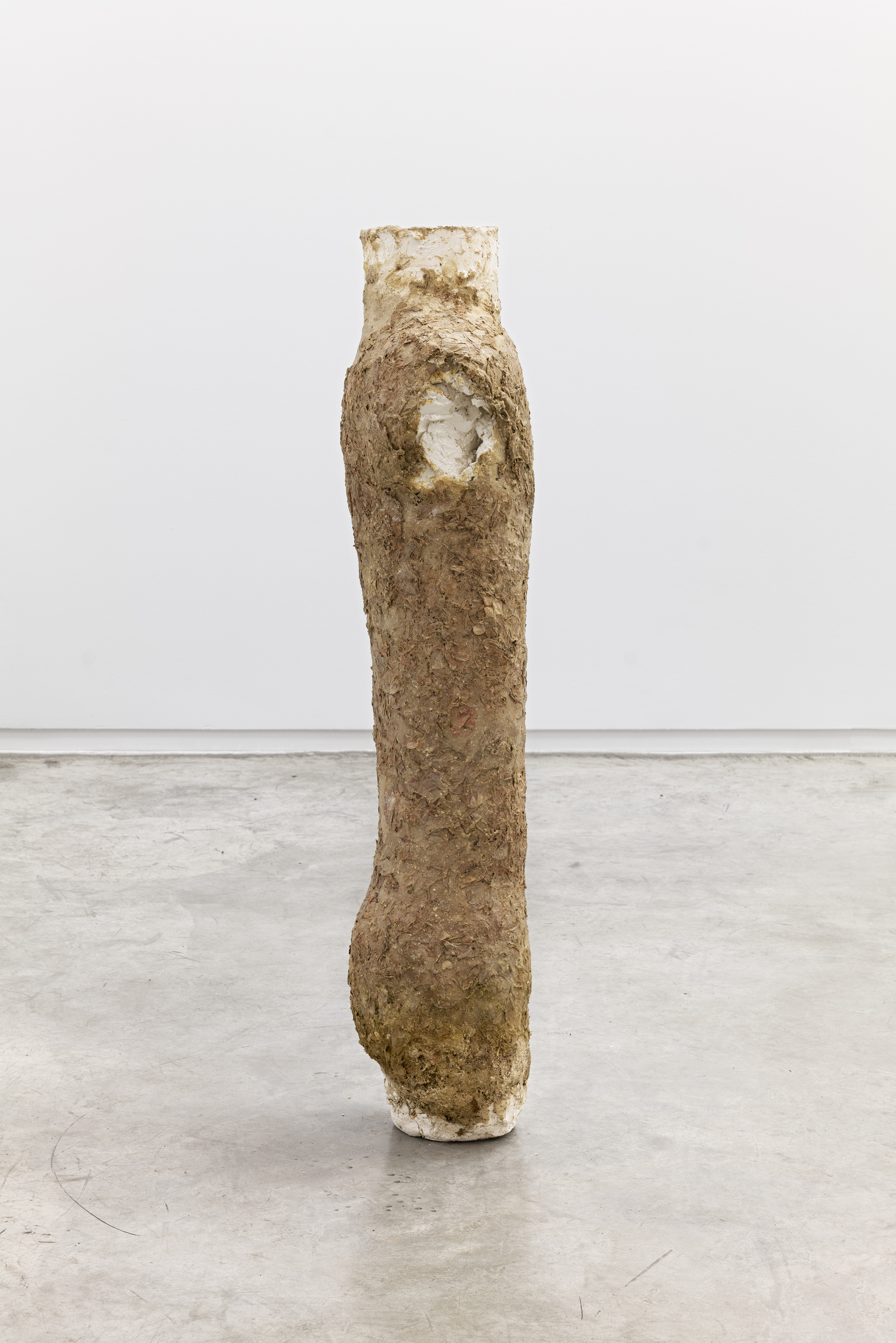
wooden structure; a sculpture made of plaster and bougainvillea bracts, representing the flank of a body, faces a sheet
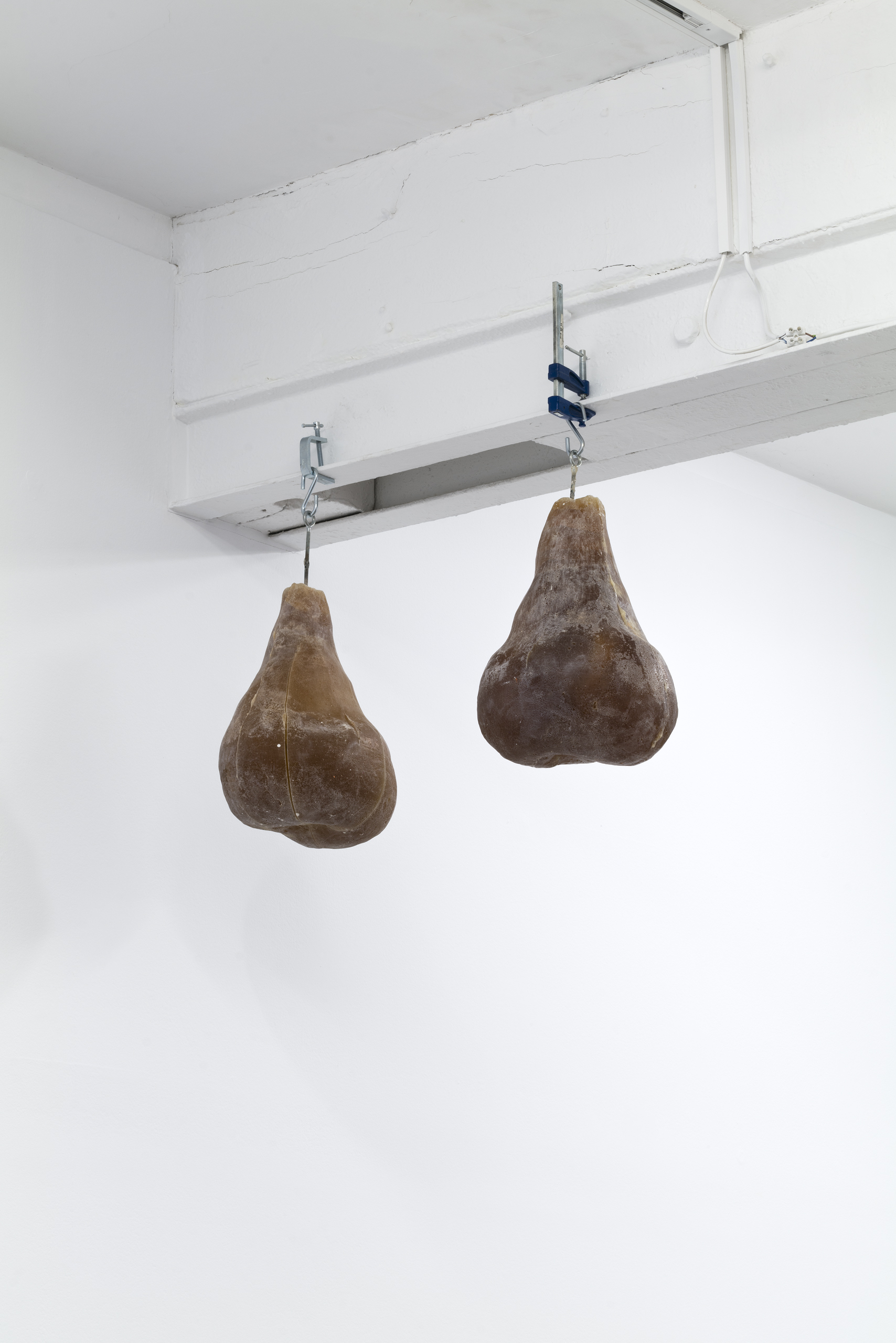
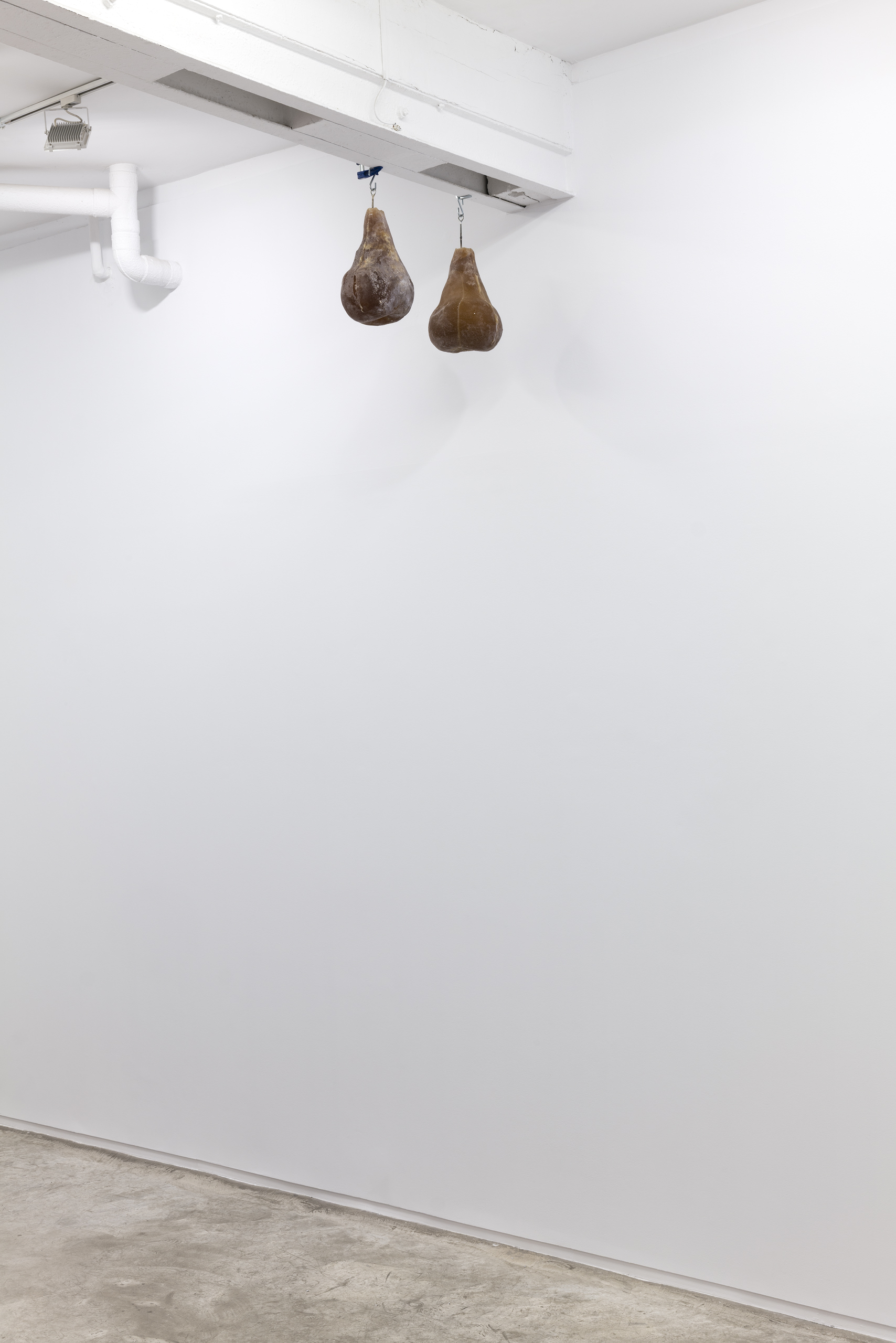
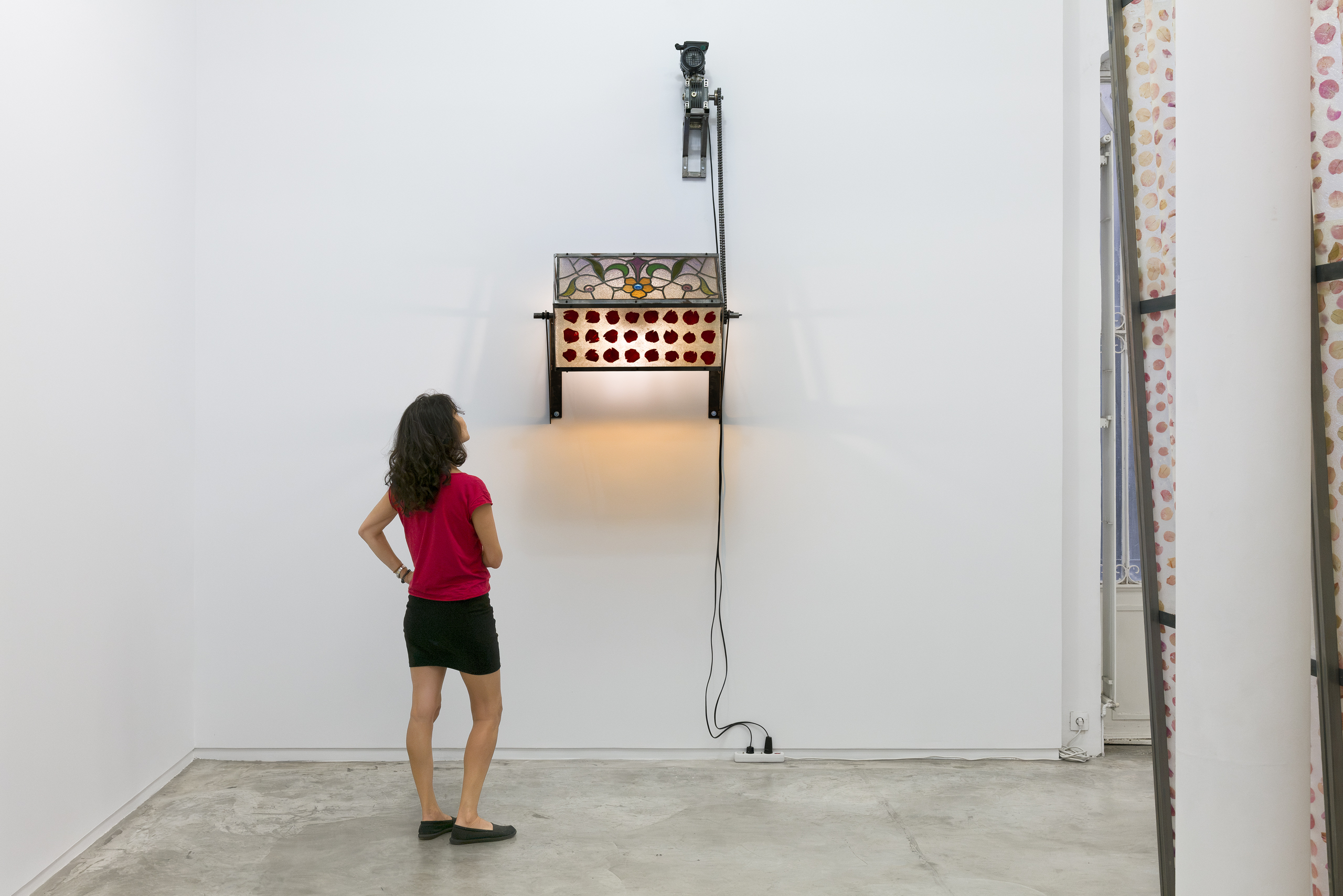
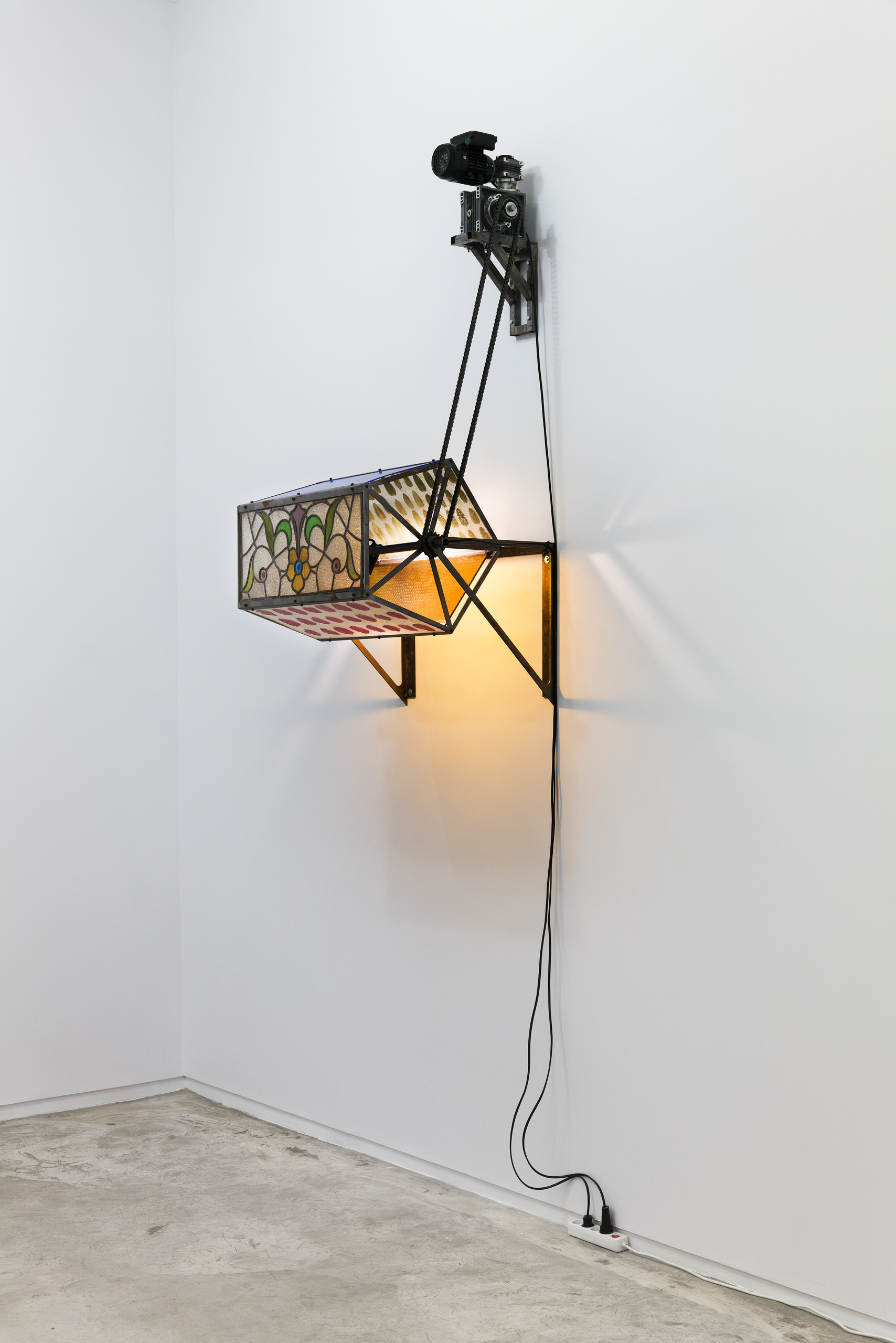
of paper made from poppies; small pears hang from the ceiling; and a mobile drum of coloured stained-glass brings
this section of the exhibition to a close. While the wall is not entirely opaque, nor is it transparent. The bougainvillea
leaves encased in fibreglass seem to conceal something within their layers. What do they conceal? In the artist’s own
words, this work heralds something that has not yet happened but is about to occur. An image waiting to emerge.
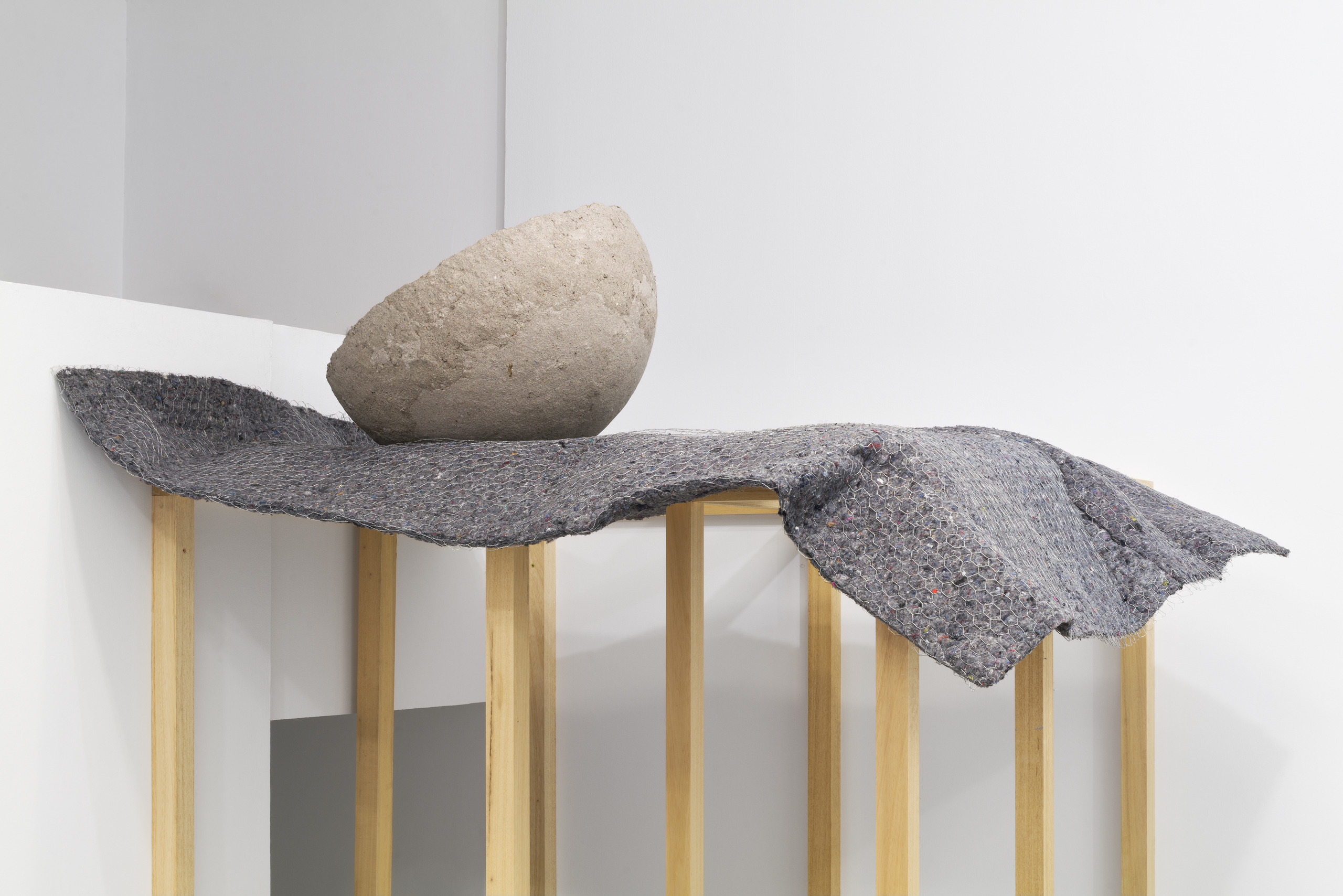
Against the wall stands a wooden structure holding a bowl. The texture and positioning of the felt, which serves as
both ceiling and tablecloth, along with some fruit hidden within that nest or fruit bowl placed high up, indirectly allude
to Cézanne’s still lifes. As in those works, here too there is something that remains hidden from view. This absence
suggests another perspective, inviting the viewer to adopt a new angle (unprecedented in previous exhibitions at the
gallery) from which to discover the colour and the work in its entirety.
On the other side of the wall, the bougainvillea flank sculpture, made from bracts sourced from a Roman garden,
alludes to an interplay of materials, textures, touch and memory. This sculpture moves away from the use of moulds,
a technique employed on other occasions, to explore the role that the human body plays today in contemporary
sculpture. The poppy paper, in turn, alludes to the Castilian countryside, while the pears evoke tasting, edibility and a
certain more or less defined idea of figuration. For its part, the stained-glass drum embodies the exhibition’s central
theme: a large, mechanical eye incorporating plant elements with various technologies and techniques. A modernist
stained-glass window blended with other more fragile materials or organic filters, such as frosted glass or, again,
petals. While some of Bestué’s recent works have explored this blend through the lens of temporality, this drum does
so through materiality. As the artist puts it, ‘Op Art and catastrophe’.
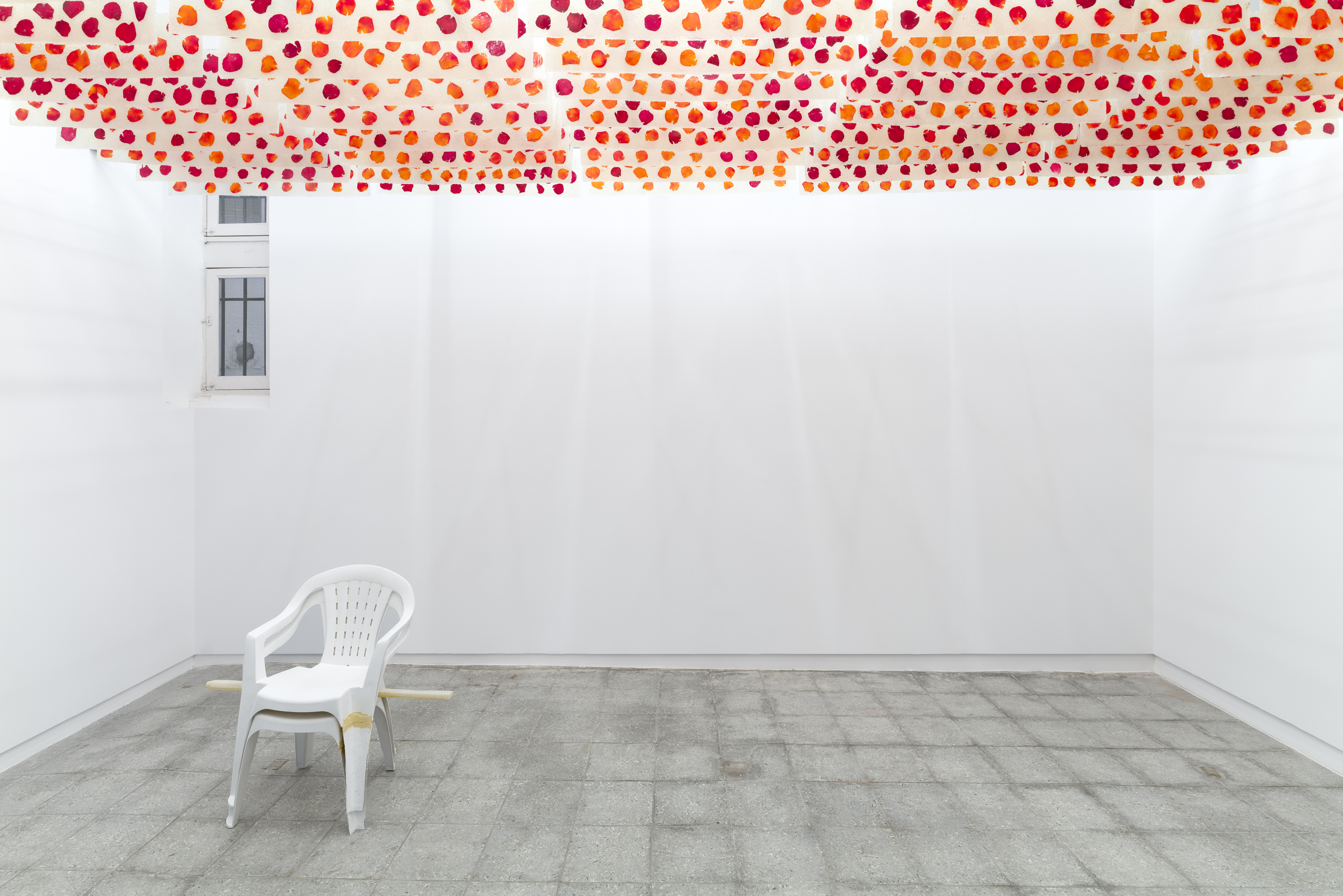
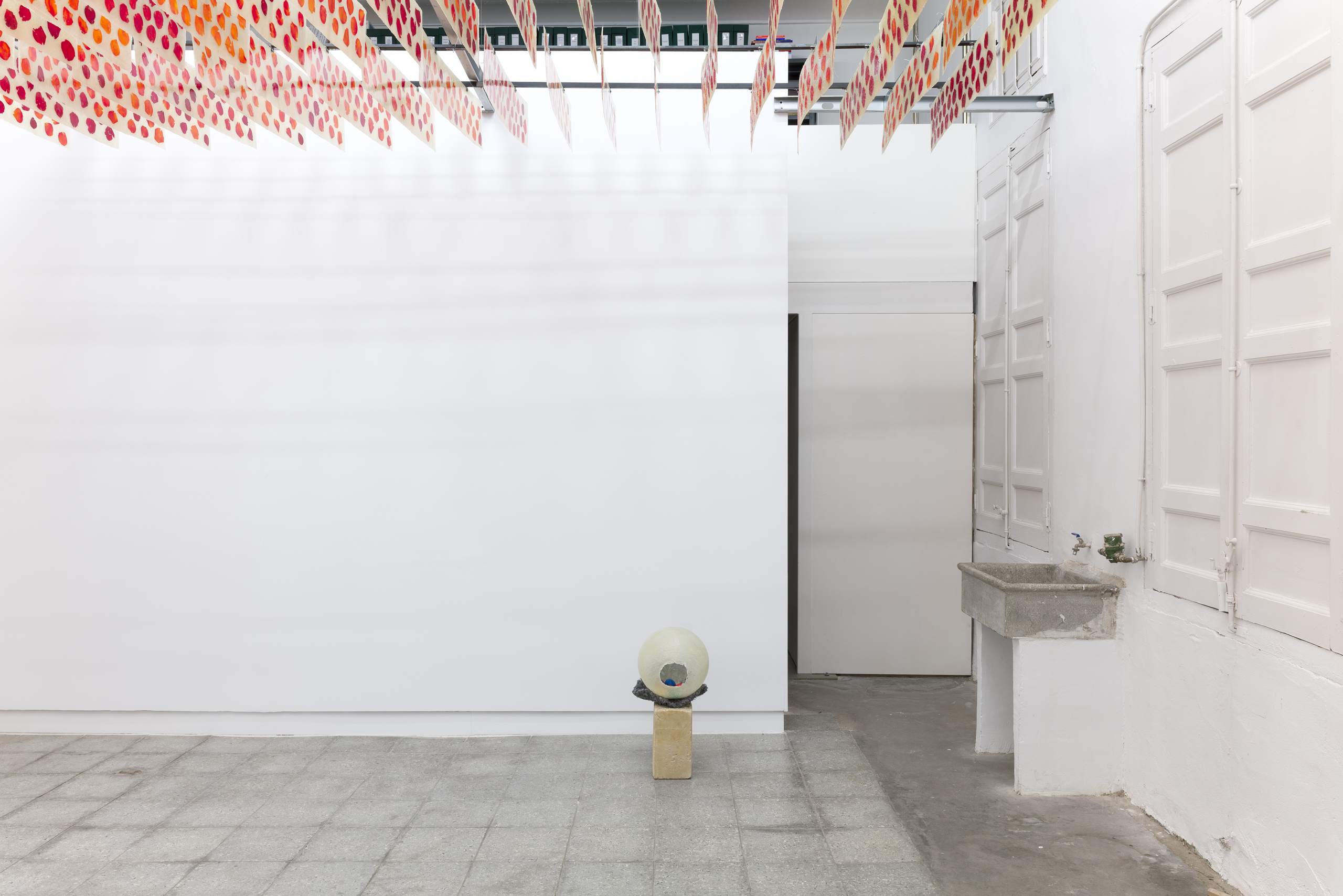
In the second room, which tends more towards installation, a ceiling of slats made from rose petals covers the entire
upper part of the space. Evoking a different sensation through height, light, colour and perception, two sculptures
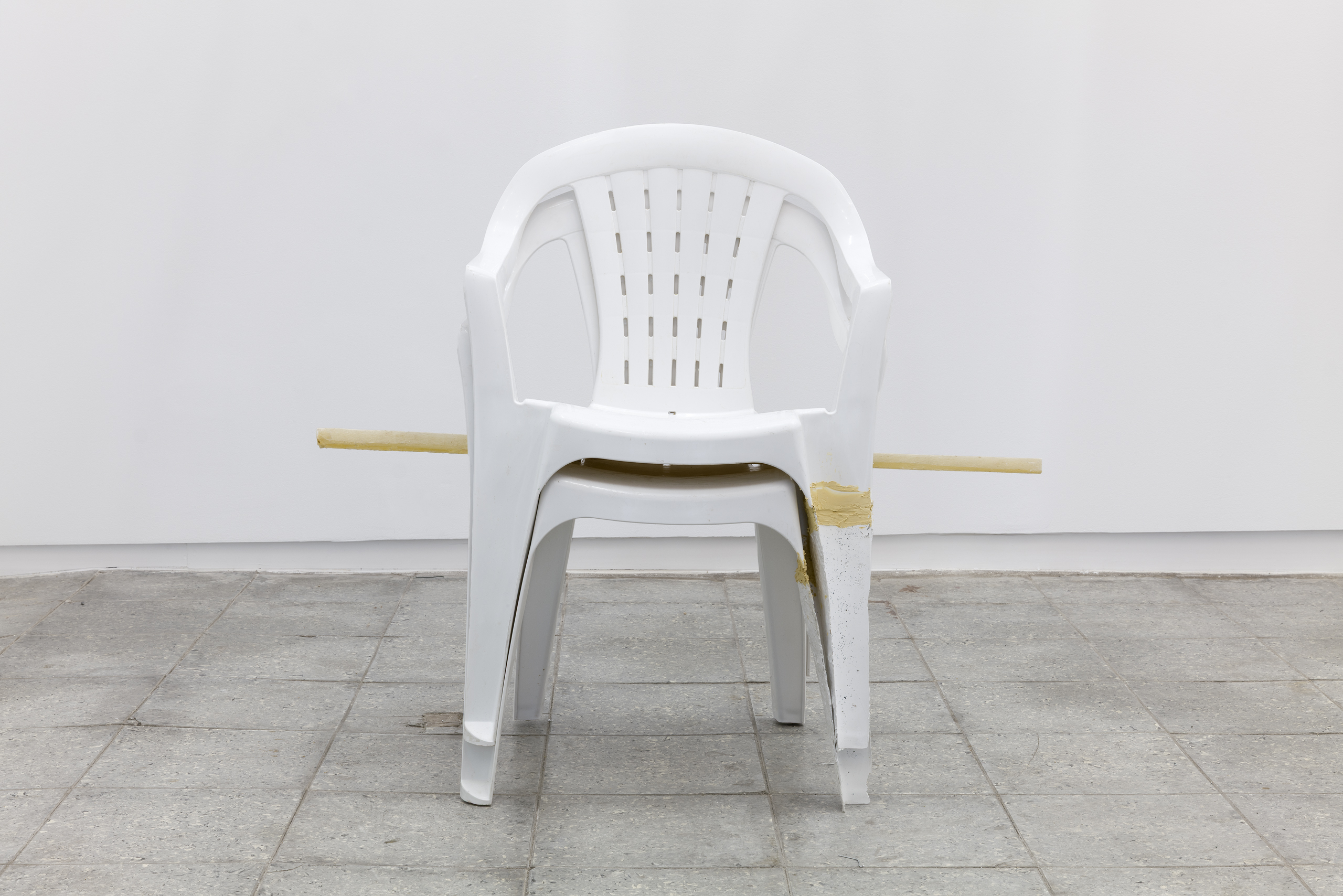
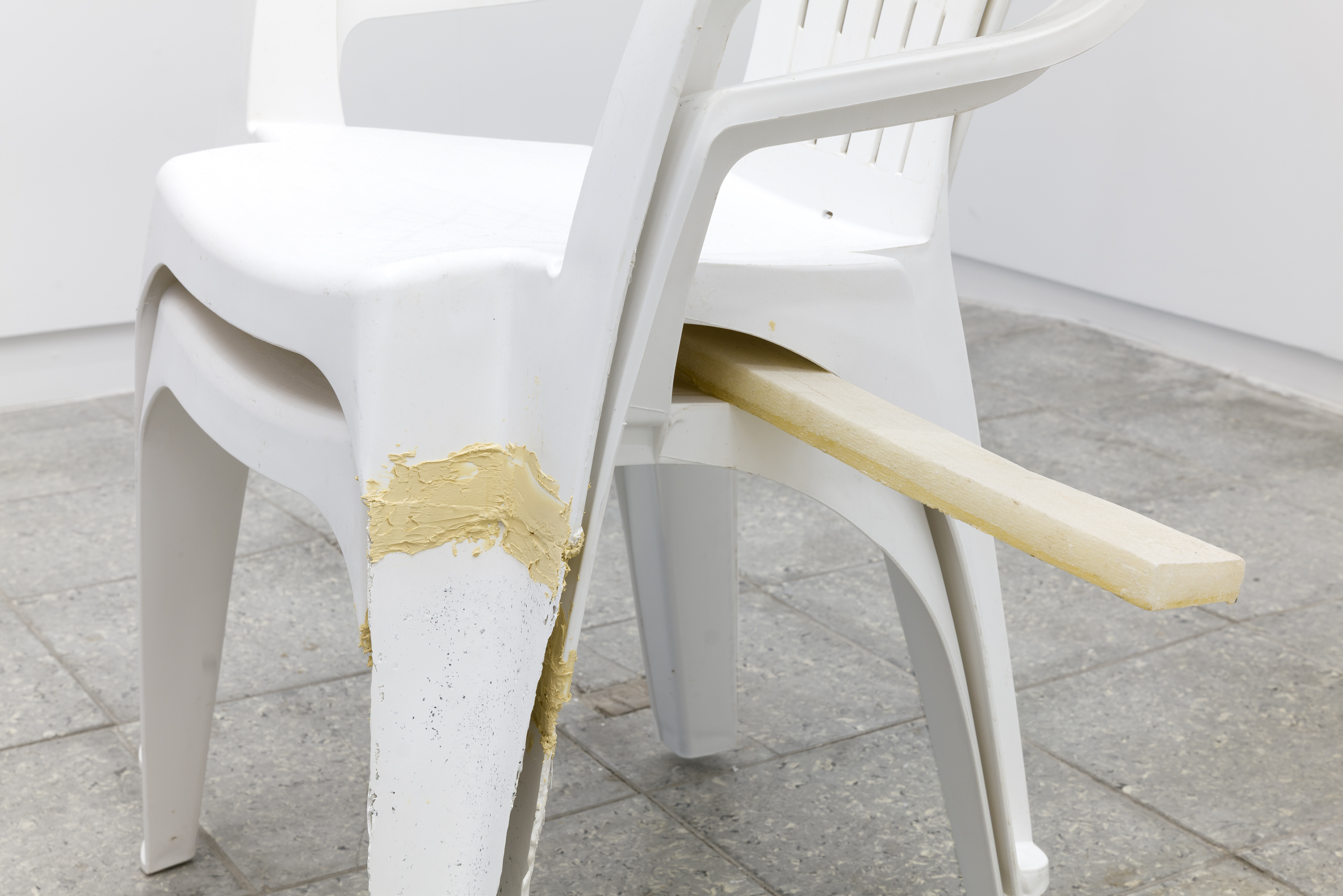
occupy the rest of the room. A pair of chairs, separated by a bar of salt, are stacked empty one on top of the other.
These are two industrially manufactured monobloc chairs, in which one of the legs has been replaced with a new one.
The leg of the top chair has been made from sand from Riazor beach in A Coruña, a nod to Samuel Luiz, who was
murdered at that very spot a few years ago, while the other is made from earth from the Víznar ravine, alluding to the
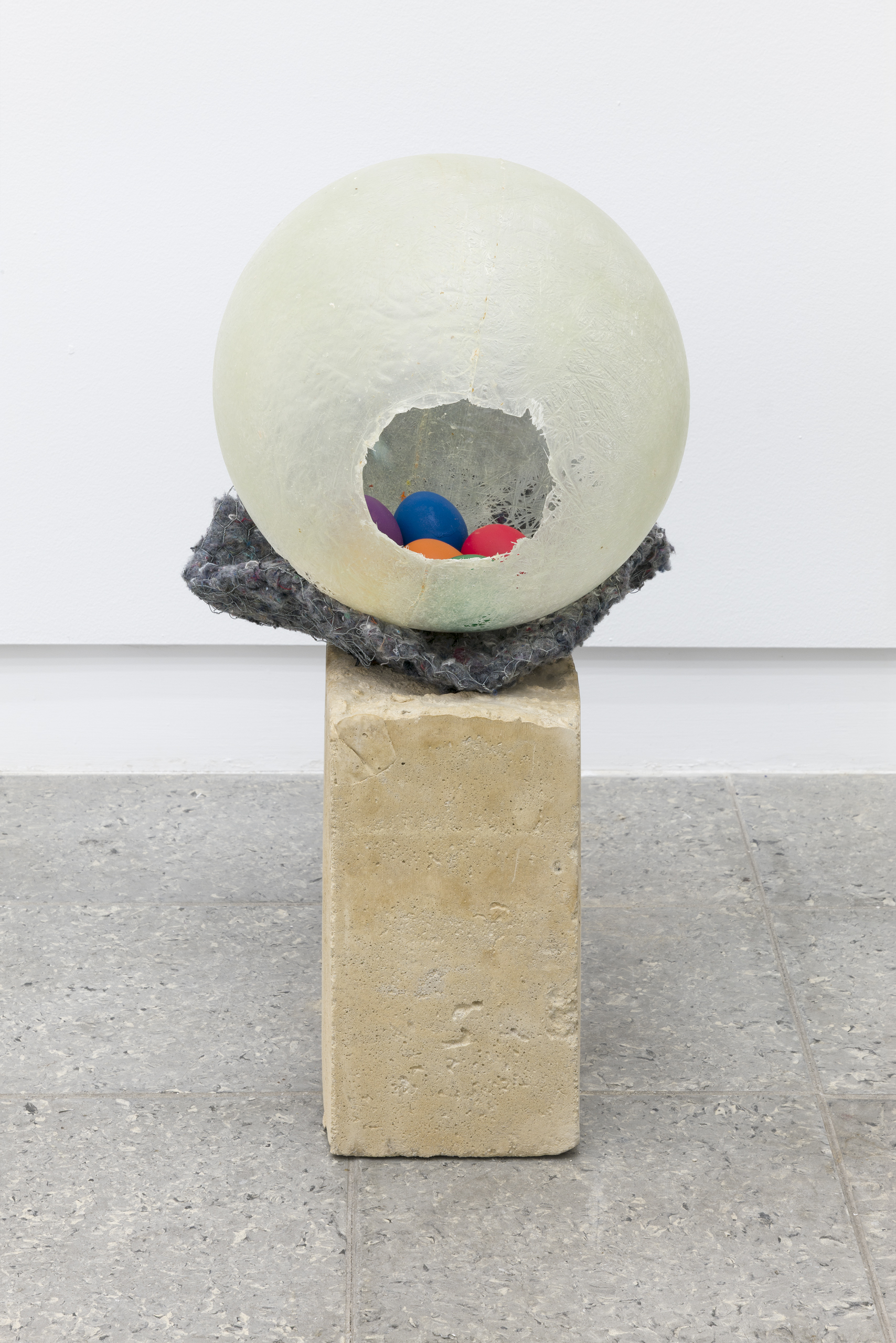
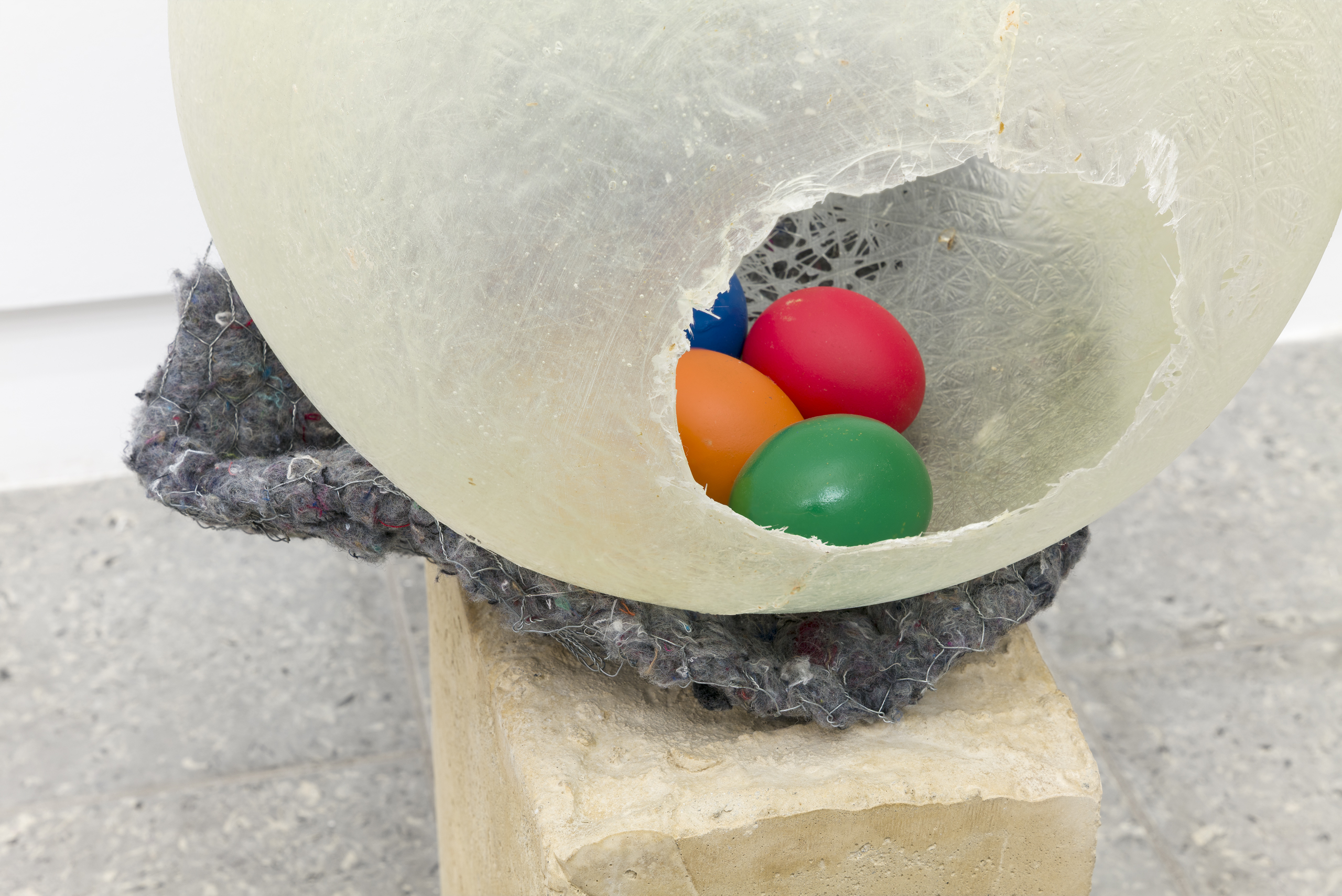
murder of Federico García Lorca.The piece that gives the exhibition its title, gran ojo, is a resin sphere containing eggs in pure, primary colours,
revealing the interior of an eye that becomes stained by the new things that enter it.
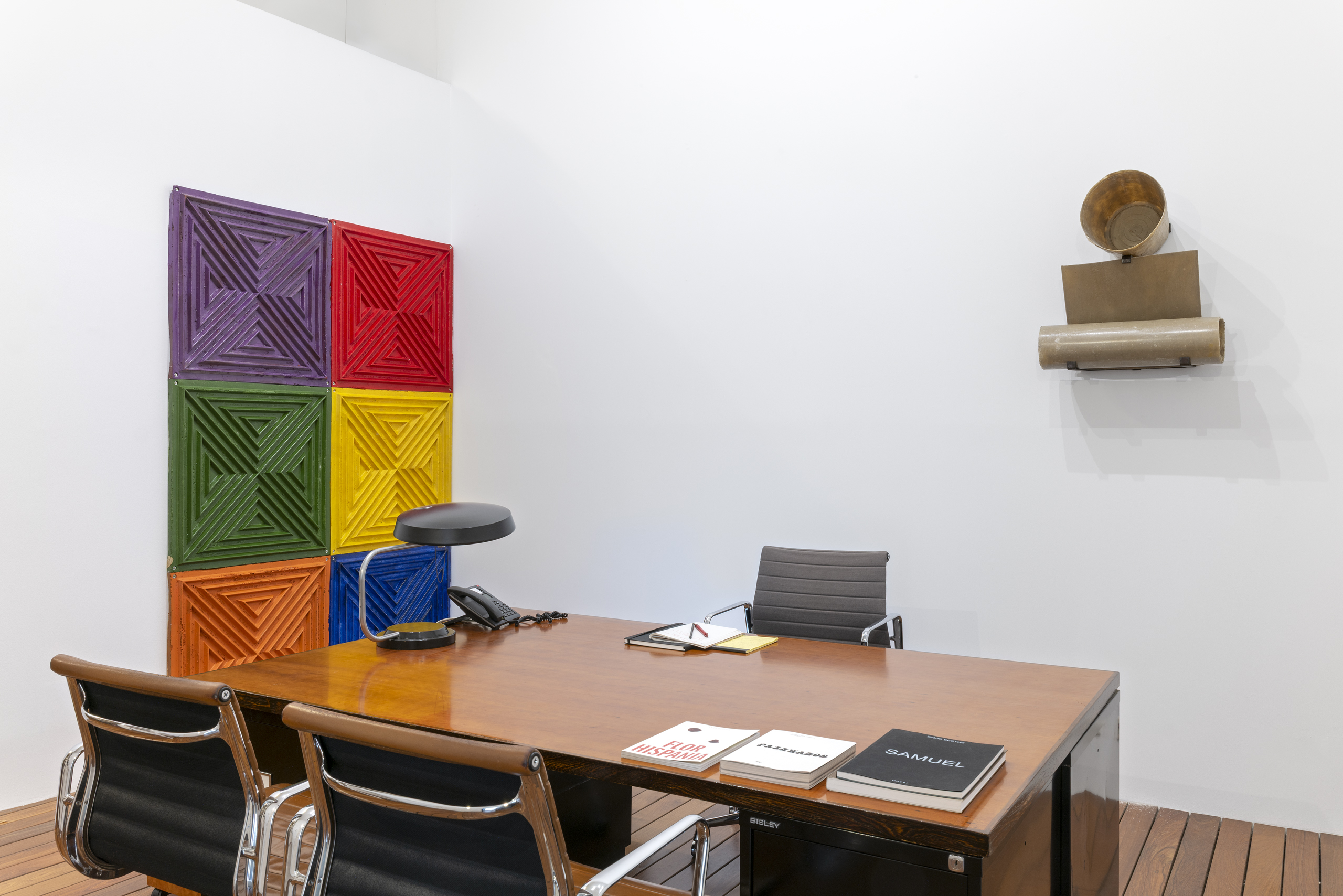
Finally, in the office, a small sculpture entitled Palabra rota (‘Broken Word’) brings together four fragments of a
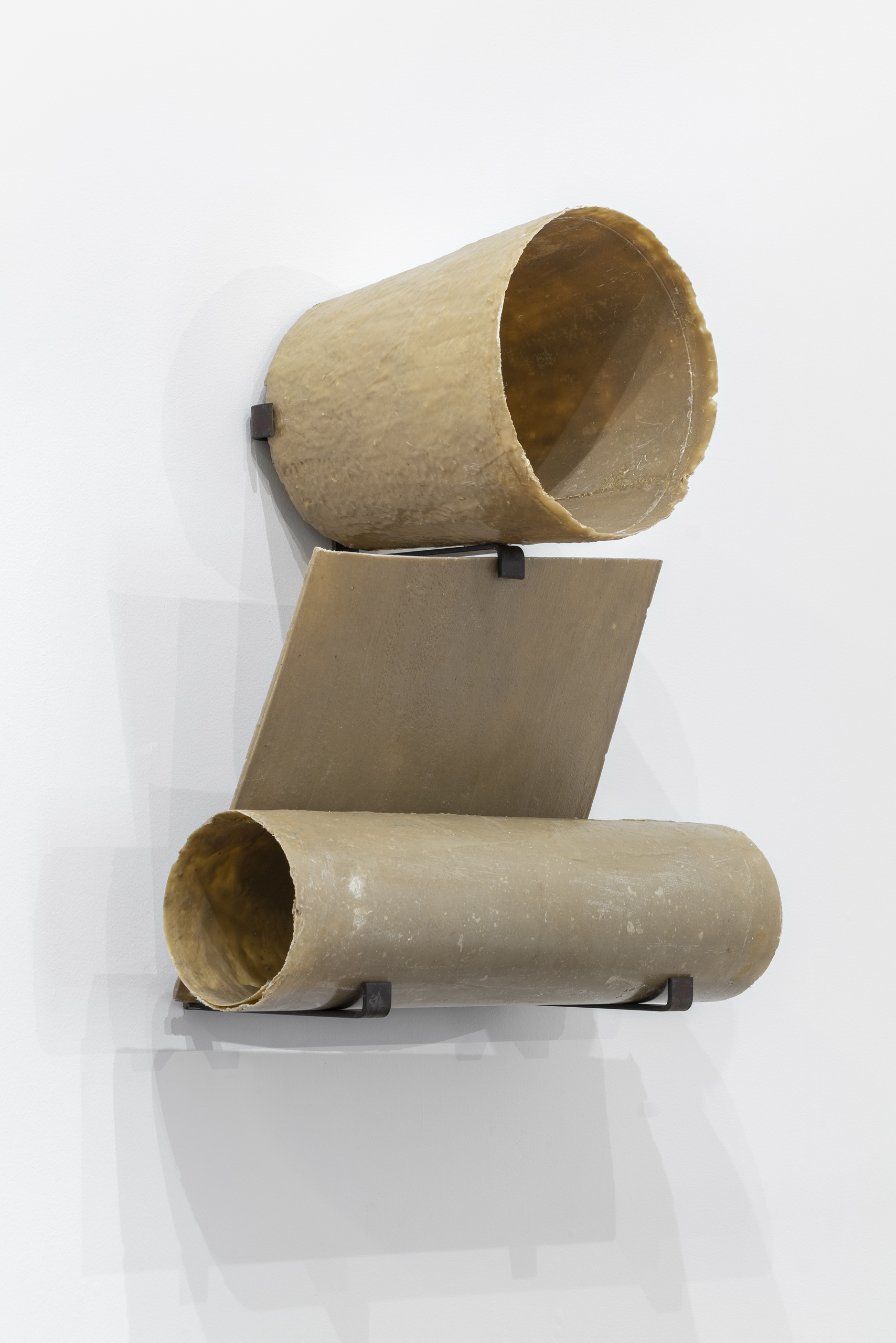
shattered wooden chair. Next to it are two wall pieces: a Pietà created during his last stay in Rome, which combines
the classical sculptural form with Oteiza’s avant-garde reinterpretation; and another newly created piece depicting
modular architectural elements designed by Rafael Moneo for Atocha station in Madrid. Previously used by Bestué in
his exhibition Flor Hispania (CA2M, 2025), they now incorporate into the originally more greyish imagery of Moneo’s
motif a combination of primary and complementary colours that, ironically, re-signify its nature.
In contrast to Bestué’s most recent exhibitions, which have centred on more specific themes primarily relating to
territory, this exhibition encompasses a wide range of explorations, concerns and interests, both conceptual and
material.